
Reflection meetings
Periodic neighbourhood gatherings where friends look back on what they've learned, celebrate small victories, and plan what to do next.
Open to anyone taking part in the life of the neighbourhood — whether through a devotional, a class, a junior youth group or a study circle.
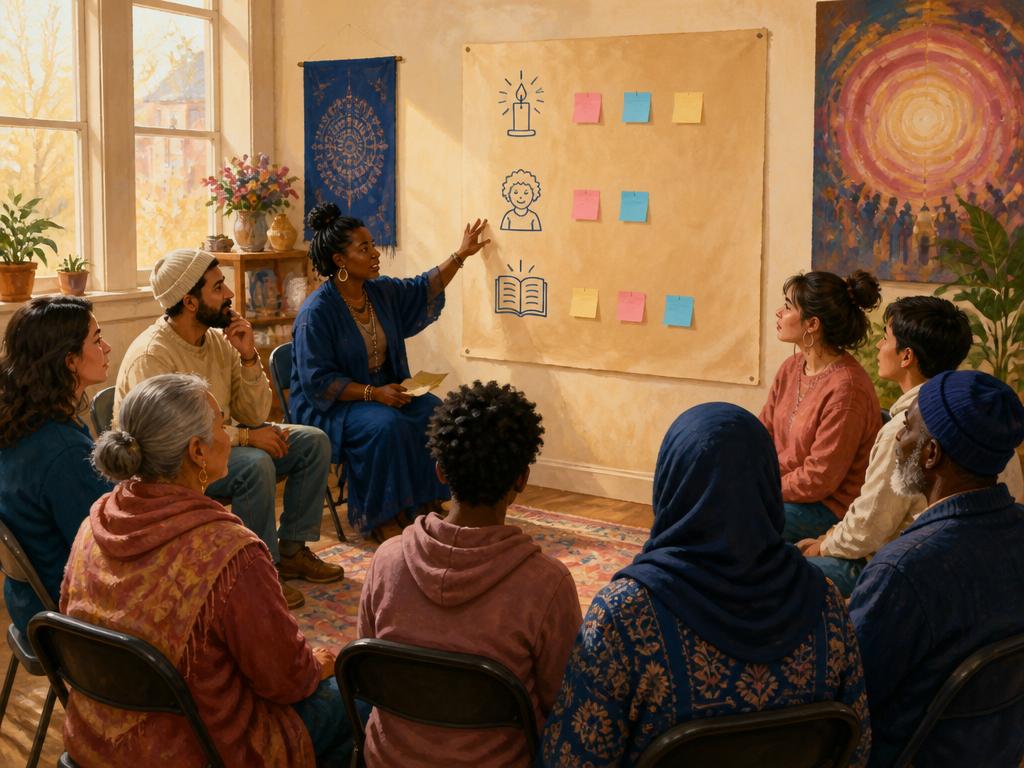
A reflection meeting is a periodic gathering — often every three months — where everyone involved in a neighbourhood's community-building activities comes together to look back, share stories, learn from one another, and plan the next stretch.
These meetings are how the work of devotionals, classes, junior youth groups and study circles is consciously held together. They are practical, conversational, and grounded in real stories from real homes and streets.
Who comes
- Anyone hosting or taking part in community-building activities in the neighbourhood — Bahá'í or not.
- Animators of junior youth groups, teachers of children's classes, devotional hosts, study-circle tutors and participants.
- Often a member of the wider cluster's coordinating team is present to learn alongside the group.
Origins & meaning
Reflection meetings are part of the way Bahá'í communities worldwide consciously plan and learn about their community-building work. They translate experience into shared insight and shared insight into next steps.
The format has evolved over the past two decades alongside the wider effort to build vibrant communities at the neighbourhood scale.
Frequently asked questions
Who can attend a reflection meeting?+
Anyone involved in or interested in the community-building activities of the neighbourhood — Bahá'í or not.
How often are they?+
Often every three months, sometimes more often in active neighbourhoods.
Do I have to speak?+
No — but the meeting is much richer when as many people as possible share a short story from their experience.
Interested in taking part?
Reflection meetings in the Niagara cluster are coordinated by the Area Teaching Committee. Get in touch to learn about the next gathering in your neighbourhood.
Email the Area Teaching Committeeatcniagara@gmail.com
Ask about other gatherings
Not everything is posted here. Send a note and someone from the local community team will get back to you with up-to-date information about reflection meetings near you.
Other community building activities
Study circle
A group that examines materials designed for youth and adults, intended to be used in a systematic effort to enhance service in their communities.
Read the guide →
Devotional
A reverent space where neighbours of every background read sacred writings, share music, and reflect together.
Read the guide →
Holy day
Sacred days each year mark the most significant moments in the lives of the founders of the Bahá'í Faith. Communities gather to remember, pray, and celebrate together — all welcome.
Read the guide →