
Study circles
A group that examines materials designed for youth and adults, intended to be used in a systematic effort to enhance service in their communities.
Open to anyone interested in their own spiritual growth — Bahá'í or not.
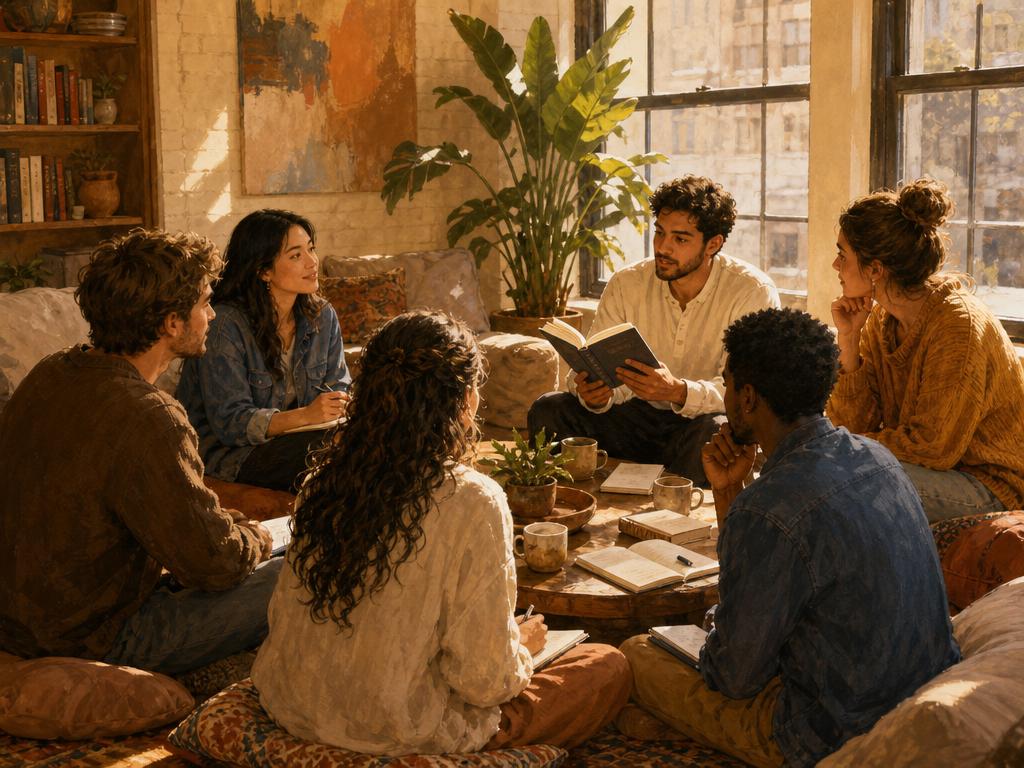
A study circle is a group that examines materials designed for youth and adults, intended to be used in a systematic effort to enhance service in their communities. Themes include prayer, the soul, accompanying others, and raising children in a spiritual environment.
The materials come from the Ruhi Institute, a Bahá'í-inspired educational programme used in over 200 countries. The first book, Reflections on the Life of the Spirit, is the usual starting point. An individual with previous experience with the materials — called a tutor — helps guide the group's pace as they all learn together.
Origins & meaning
The Ruhi Institute began in rural Colombia in the 1970s as a Bahá'í effort to build capacity for community service. Its sequence of books has since been adopted in nearly every country as the curriculum for Bahá'í study circles.
Each book builds practical capabilities — visiting people, teaching children, accompanying youth, hosting devotionals — alongside spiritual reflection. The aim is not academic study but a steady widening of what each person feels able to contribute to their neighbourhood.
- Ruhi
- An educational sequence of books used worldwide for Bahá'í-inspired study circles.
- Tutor
- An individual with previous experience with the materials who helps guide the group's pace as they all learn together.
Frequently asked questions
Do I have to be Bahá'í?+
No. Study circles are open to anyone.
Is it just reading, or is there homework?+
Between sessions, you're invited to try a small 'act of service' — visit a neighbour and share a prayer, memorise a passage, host a small devotional. These are gentle invitations, not assignments.
Can I bring my partner who isn't interested in religion?+
Yes. Many non-religious people find the discussions on virtues and service genuinely thought-provoking.
Are there study circles for youth?+
Yes — Book 5 of the Ruhi sequence specifically trains animators of junior youth groups, and youth gather in their own circles too.
Ask about other gatherings
Not everything is posted here. Send a note and someone from the local community team will get back to you with up-to-date information about study circles near you.
Other community building activities
Devotional
A reverent space where neighbours of every background read sacred writings, share music, and reflect together.
Read the guide →
Junior youth group
Young people aged 11 to 14 meet to read together, talk about the world they want to build, and carry out small acts of service in their neighbourhood.
Read the guide →
Reflection meeting
Periodic neighbourhood gatherings where friends look back on what they've learned, celebrate small victories, and plan what to do next.
Read the guide →